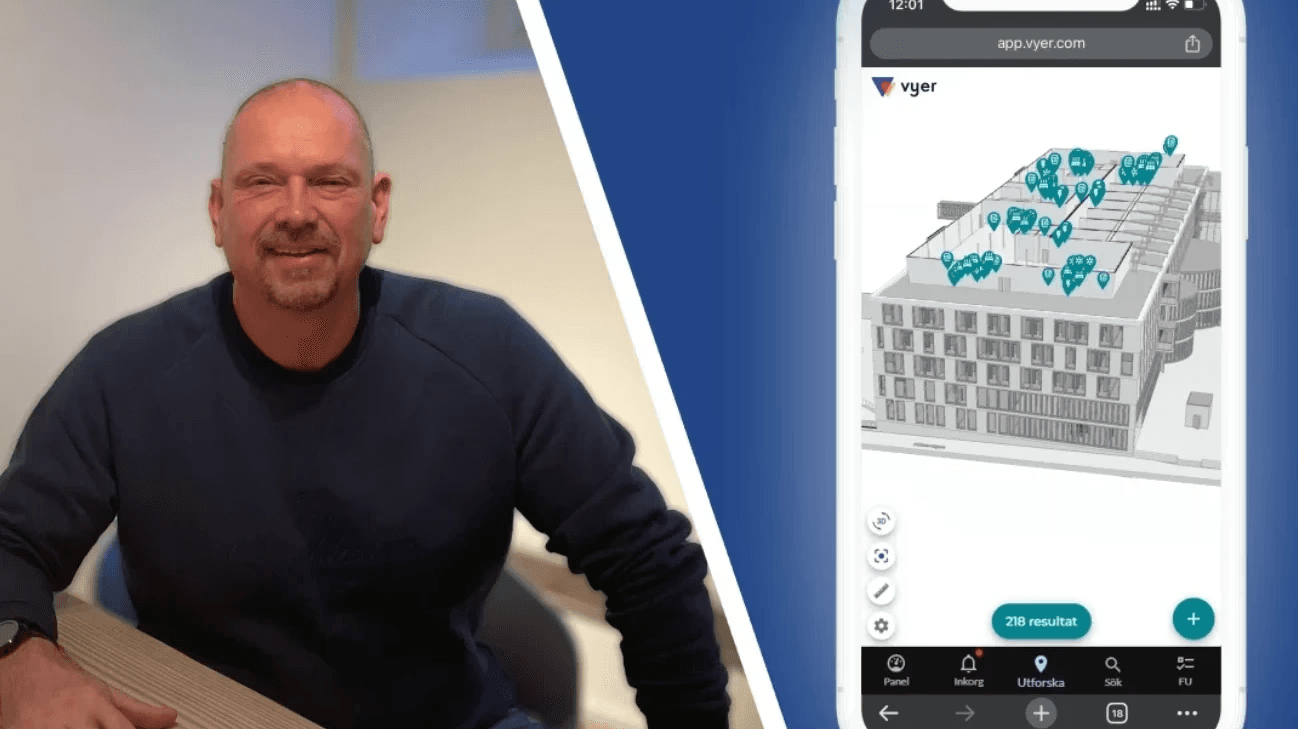
The pedestal after the investment: "Even small property companies can benefit from a digital twin"
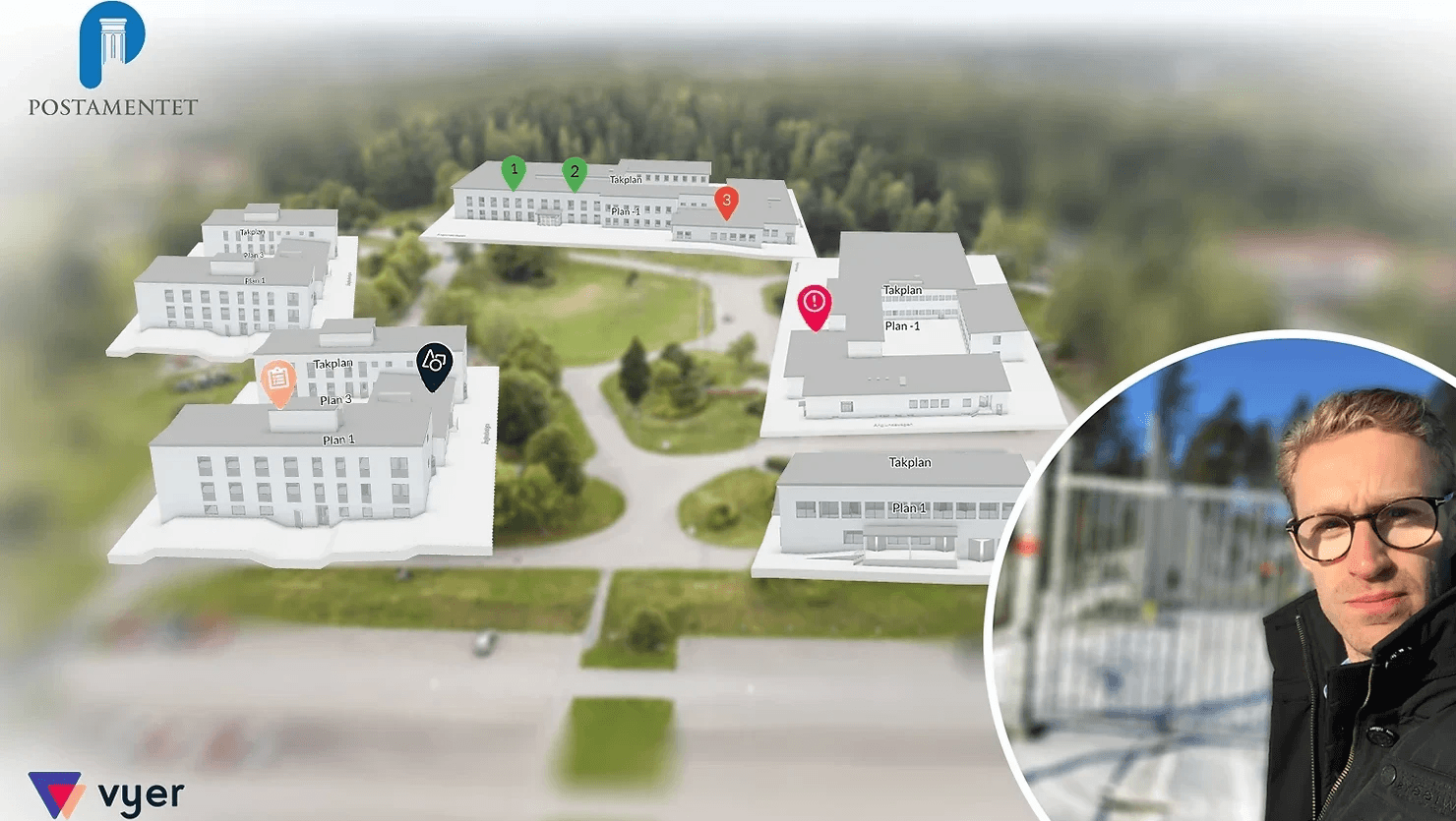
Thomas Heaster, owner of the property company Postamentet AB, has chosen to invest in a digital twin to streamline and enable remote management. Photo: Postamentet / Vyer
The privately owned property company Postamentet AB is one of the smaller Swedish property owners that has made significant progress in its digitalization efforts in a short time. Just over a year ago, the company introduced digital twins from Vyer to facilitate collaboration and enhance the ability to manage remotely.
"We save time in the practical workflow and gain a better overview of the property, what is happening and what is being done. There is great value in this, which is difficult to price," says Thomas Heaster, manager and owner of the company.
Digitalization is high on the agenda for most property companies, but investment decisions often vary due to different factors such as resources, complexity, and objectives. A survey among 300 Swedish property owners shows, among other things, that companies with higher turnover have progressed further in their efforts compared to companies with lower turnover.
"I believe that many small companies prioritize other things, as it can be difficult to see the value directly in the income statement, but this will come with time," says Thomas Heaster, owner of Postamentet, one of the smaller companies that has dared to invest.
Postamentet, which focuses on the long-term development of socially important properties, owns and manages a property in Flen that is rented by the Migration Agency. With 20 buildings, totaling 19,000 sqm, the property constitutes its own block in an old hospital area.
"As long as there are a few people working with the property and there is a need to share information, one benefits from a digital twin," he suggests."
Goals and benefits of digital twins at Postamentet
Better overview of the property's condition and processes
Provides increased control and improved possibilities for management from a distance and collaboration between employees over geographical distances.
Streamlining of case management
Location-based cases and reporting issues, along with PDF exports of materials to external contractors, enable quick localization and action. Improved communication and reduced issues related to ambiguous location descriptions.
Simple reconciliation in accounting
A unique case number facilitates the reconciliation of invoices against cases in the system with clearer links to problems and locations.
Smooth rounds with drawing support
Simplified execution, follow-up, and documentation of systematic fire safety work with map support and automatic case generation when reporting deficiencies.
Access to history of faults and actions
Increased ability to analyze patterns and make informed decisions.
Documentation of employee knowledge
Transferring knowledge from employees to a shared system strengthens the organization in the event of staffing changes and retirements.
Needs and objectives in focus for the digitalization decision
Thomas Heaster's decision to invest in digital twins arose from the organization's need, among other things, to better manage their information for efficient workflows, as well as to be able to handle more of the management remotely.
"I am working remotely in Varberg, and we have an operations technician and a caretaker on-site. The digital twin solved many of our problems regarding keeping track of things and exchanging information, he explains."
"The digital twin solved many of our problems regarding keeping track of things and exchanging information"
The goal moving forward is to link and document all management-critical information to the digital twin, which will become the hub of the business, to strengthen the organization in the long run.
"Our operations technician has worked for us for ten years and will retire in a few years, so he will take all of his knowledge about the property with him. For us, this is also about transferring that knowledge to Vyer so that the next operations technician does not start from scratch but can browse the system."
"Since you can easily sort and filter the information, I see no risk of it becoming an information overflow. I feel that control has improved, and I believe that most would benefit from having as few systems as possible," continues Thomas Heaster.
Rapid transformation possible for smaller property companies
An advantage of having a smaller organization is that Postamentet has relatively easily been able to transition to new digital working methods and quickly see effects in daily operations.
"It has worked well to implement new routines and to ensure we are doing the right things. We save time in the practical workflow and get a better overview of the property, what is happening and what is being done. There is great value in this, which is difficult to price," says Thomas Heaster.
"It is a significant improvement in the way we work. We save time on each case, and both our contractors and we appreciate that."
Employees are now continuously mapping information about technology in the property and actively working with location-based issues and reporting from tenants and residents, as well as performing and documenting their systematic fire safety work in the digital twins.
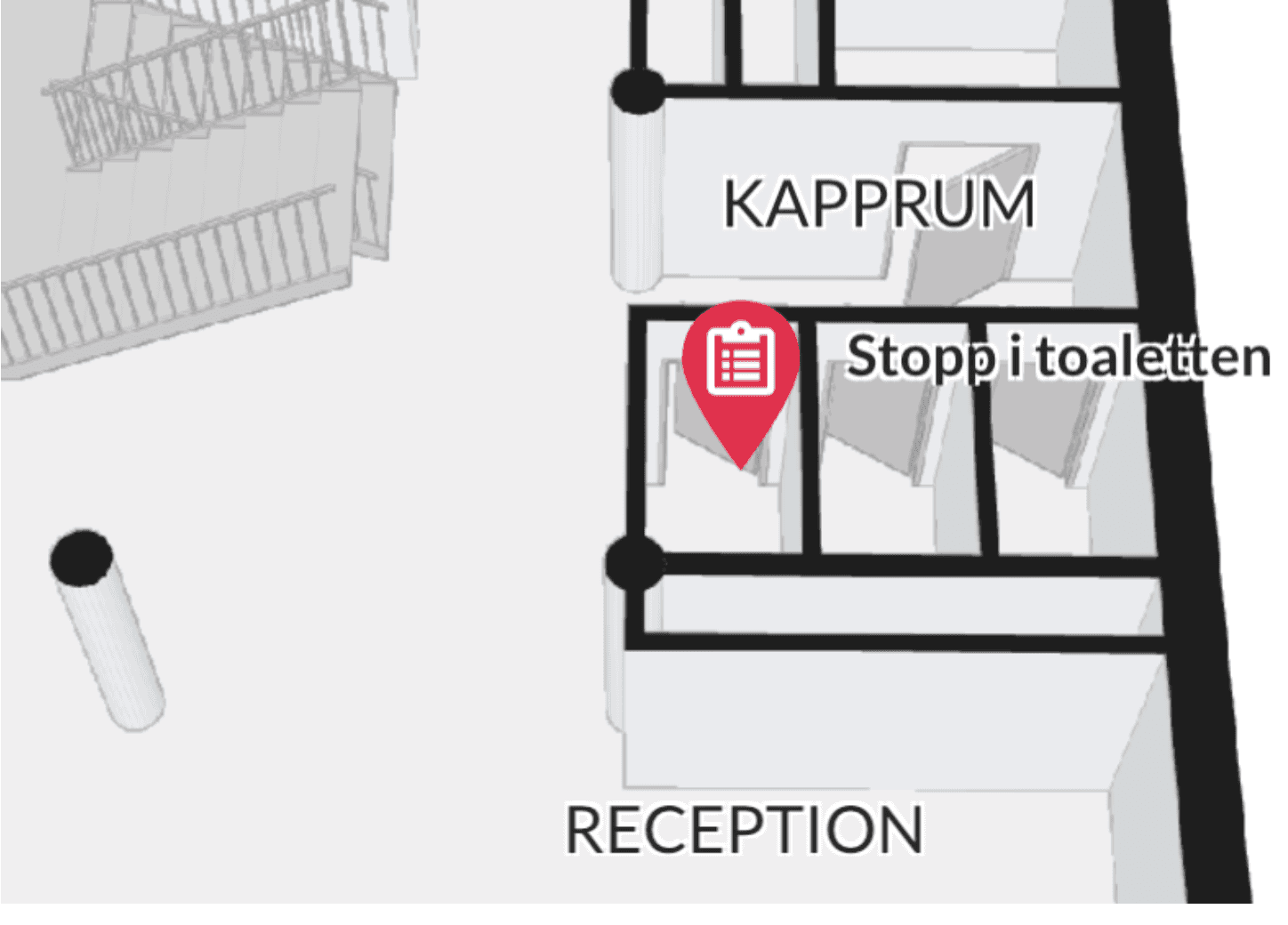
Fault reports are marked on the drawing for easy localization. History of faults and actions is saved. Image: Vyer
"When faults are marked on the drawing, the risk of the person addressing the fault having to run around searching or fixing the wrong things is reduced. I have not received any such complaints now, and that is a clear advantage."
PDF exports of materials with details about faults, maps, contact information, and case numbers enable quick localisation and action, even for external contractors, while the unique case number facilitates invoicing and reconciliations in accounting, which is handled remotely.
"It is a significant improvement in the way we work. We save time on each case, and both our contractors and we appreciate that."
The history of faults and actions, linked to locations and components, built up in the twin also serves as support for analysis and decision-making in operations and management.
"If we see, for example, that there are often blockages in the drains in one place, we come to the insight more quickly that it may not be the sink but a system that needs to be reviewed. Previously, one relied more on gut feeling; it has not been documented where the faults are and how often they occur. Now we get a real grasp of it and can use it when making decisions," says Thomas Heaster.