Better insight for property owners and operations with a digital twin
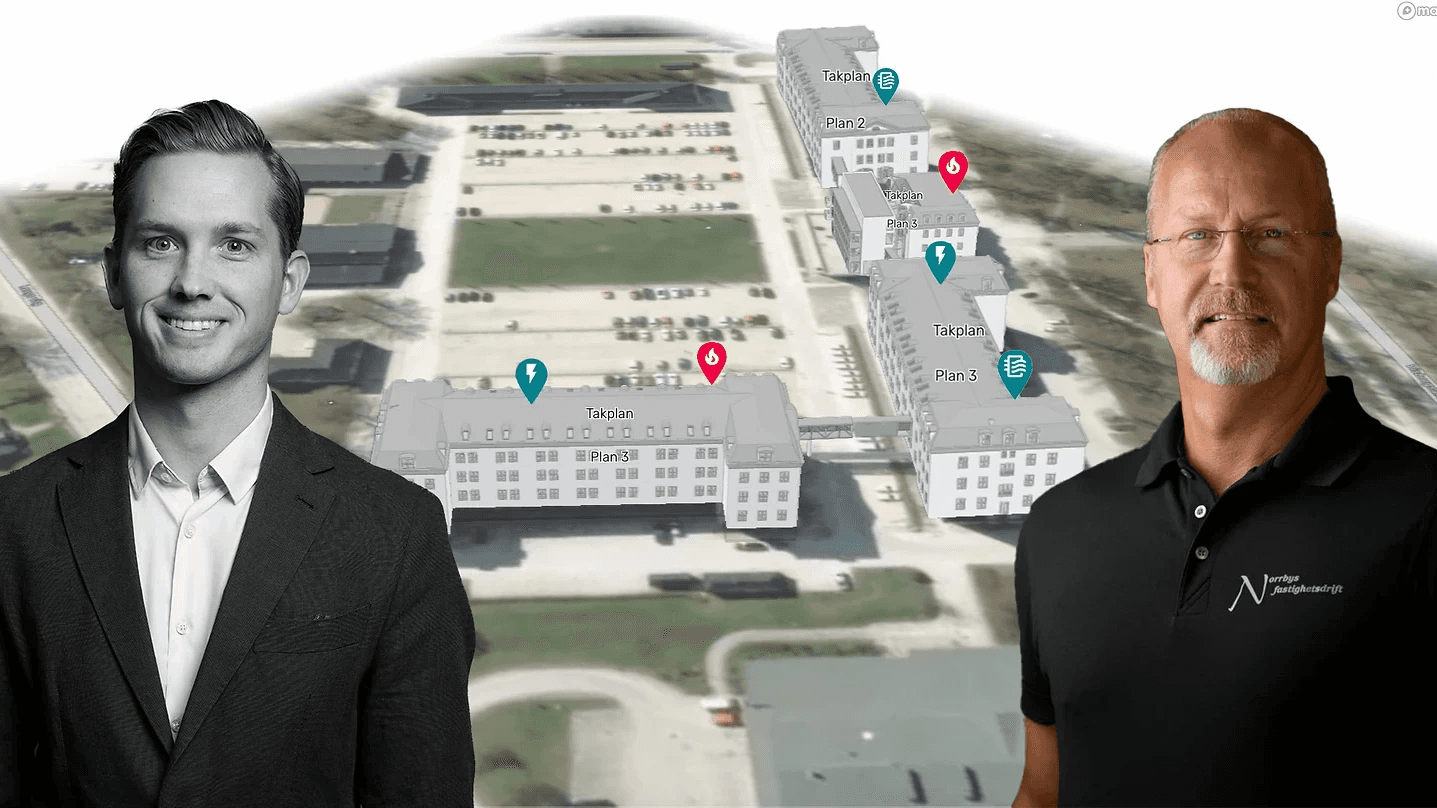
Digital twin for the property Visborg 1:15. Left: Elias Filén, commercial manager at Vacse. Right: Magnus Norrby, operations manager at Norrbys Property Management. Image: Vyer / Vacse / Norrbys
The property owner Vacse is investing in the optimization of its management. In the property Visborg 1:15 on Gotland, they are collaborating with external operational operators from Norrbys Fastighetsdrift to coordinate information in a digital twin.
"What appeals to me the most is being able to see all the buildings and plans, it makes it easier when you have to find your way around the property," says Magnus Norrby, operations manager and owner of Norrbys.
The property company Vacse owns and manages several of Sweden's socially important properties, focusing on enhancing projects from a sustainability perspective.
"Vacse is constantly developing the properties for the future and one step in the work is to create digital twins. With digital twins in place, we hope to reduce climate impact and increase customer satisfaction," says Elias Filén, commercial manager at Vacse.
In connection with Vacse implementing a digital twin in the property Visborg 1:15, the team at Norrbys Fastighetsdrift has started using the new technology as a tool in management.
"During system setup and commissioning, the collaboration has worked well, and the operational operator has been involved and influenced from a long-term perspective," says Elias Filén.
Benefits that digital twins contribute to at Vacse
Reduced transportation to the property
Reduced administration
Proactive maintenance work
Better case management and feedback to tenants
Improved systematic fire protection work
Digital twin as a tool in management
Property operations actively work to make information available in the digital twin, which provides both a visual overview of the property, important technology, and various processes.
"We map all technical systems and all information about the system, with both images and documents in the twin, to quickly identify where they are in the buildings," explains Magnus Norrby.
The operations also plan and carry out systematic fire protection work with the support of location-based control points and instructions in the twins.
"This makes it easier for us to follow up the fire protection work where we, as property owners, are ultimately responsible," says Elias Filén.
"It's easier to make a fault report from the tenant's side when they can see and recognize the room they are in and easily mark it on a plan. Most importantly, we have improved our handling time, it is faster and feels safer."
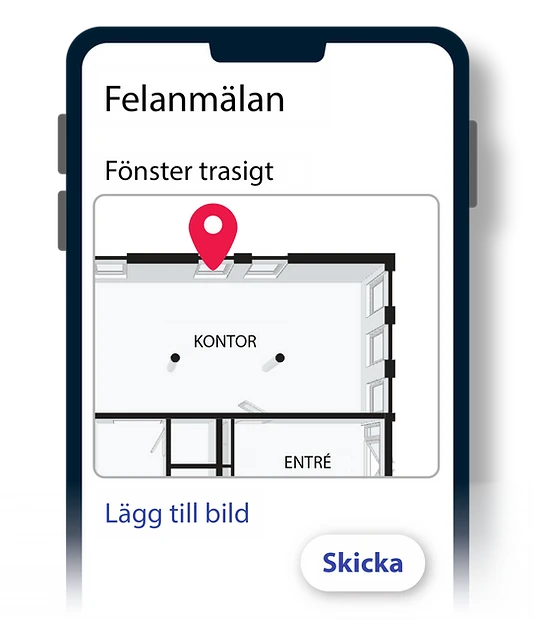
Error report with location marker in the drawing.
During the spring, they also activated public error reporting, which allows tenants to mark faults on a drawing, whereby the faults automatically appear in the digital twin.
"It works really well. It's easier to make a fault report from the tenant's side when they can see and recognize the room they are in and easily mark it on a plan. Most importantly, we have improved our handling time, it is faster and feels safer," says Magnus Norrby.
Improved communication
With nearly 20 years as an entrepreneur in property technical management, Magnus Norrby has seen enormous development in the industry, especially regarding digital tools.
"I got involved just as it started to digitalize. Many properties had computer-controlled ventilation and monitoring, but none central. So what I have focused on the most, and tried to get my clients to invest in, is connecting systems."
He sees advantages in gathering knowledge in the twins, both for operations and for the property owner.
"The property owner can go in and see how many fault reports we have received this month and if all preventive maintenance has been done. This means that communication between us gets even better," says Magnus Norrby.
"Views are a good complement to Vacse's other property systems and in my role as a commercial manager, I get better insight into the property and ongoing cases. The tenants are satisfied and the operations can more easily coordinate efforts to avoid unnecessary transportation," concludes Elias Filén at Vacse.